Carl, while traveling through the Downtown Tunnel (which goes from Norfolk to Portsmouth): I remember when this went in. It'll never work, they said. Portsmouthers love their ferry. Three months later... (He laughs).
Ellen: It's a lot quicker than a ferry.
Carl: Well, not really. I mean, if you were driving a car you had to line up. But if you were a pedestrian, you just paid your ten cents and walked right on.
Ellen: But this was built when the car was becoming the major source of transportation, right? In the fifties sometime?
Carl: Yeah. Before the war, most people didn't have cars. They took buses or streetcars, or just walked everywhere. But in the fifties... that was really the first era when everyone had cars.

Wednesday, April 17, 2013

Wednesday, March 13, 2013
Learning to love jazz
Carl: I guess I got into jazz because of WTAR. You know, "we'll try another record." They meant it. Back then jazz was an integral part of popular music, and they might just as well play a Red Nichols record as a Guy Lombardo record. I started to figure out what I liked.
Carl's childhood home in Park View
Carl and I drove through Park View in Portsmouth today:
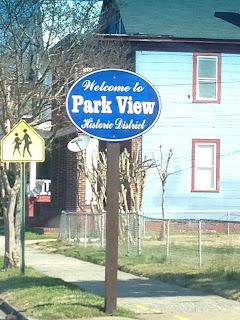 Much of the area was clearly razed in the sixties to make way for brick ranches, but a good many older houses remain, including the one Carl grew up in:
 In this post, he related his first glimpse of a truck. He recalls sitting in the bay window (visible at the right of the house) when he saw it.
While driving around Portsmouth, we also saw Norcom High School. Carl relates:
I went to Wilson. That was the white school. Norcom was right next to it, but it was the black school. Totally separate. They both had football teams, but they never played each other, because white teams didn't play black teams. You really can't believe how... profound the separation was if you didn't grow up with segregation.


While driving around Portsmouth, we also saw Norcom High School. Carl relates:
I went to Wilson. That was the white school. Norcom was right next to it, but it was the black school. Totally separate. They both had football teams, but they never played each other, because white teams didn't play black teams. You really can't believe how... profound the separation was if you didn't grow up with segregation.
Saturday, August 25, 2012
From Methodism to atheism
Ellen: Tell me about your religious upbringing. Who was the religious person in your household? Hattie?
Carl: My grandmother, Big Hattie. Her grandfather was one of the people who established the Methodist church in Portsmouth... Monumental was the first Methodist church in Portsmouth. He was one of the founding members, so of course we went to Monumental Methodist Church in downtown Portsmouth. (The link suggests that the original church burned in 1864, and was rebuilt in 1872-76. Carl is probably referring to this time period with regards to his great-great-grandfather.)
I can't remember when they didn't shoot me off to Sunday school... they must have had classes for infants (laughs). By the time I was four or five, I had to show up at 9:30 every Sunday for Sunday school. Then I had a whole half-hour break before I had to go to church, eleven o'clock to twelve, or one if the preacher was going good, which they sometimes did. Then I had to go back at three in the afternoon to a young people's services, then I had to go back for Sunday night services, then I had to go to Wednesday evening services. That was routine. I learned to hate it. I still despise it.
Ellen: How old were you when you learned to hate it?
Carl: About the time I went to high school. I was old enough to say I'm not going to do it. Before that, I couldn't-- when you're nine or ten, you don't stand up, but by the time you're in high school-- I said, "I'm not going to do that." I said, "I'm not going to Sunday school, and I'm not going to church." And I haven't been since.
They used to give us a nickel-- which was a goodly chunk of money back then-- to drop in the collection plate at church. We had the half hour break between Sunday school and church, so we would walk down to the New York Delicatessen down on High Street, which was the only place that was open on Sunday back then, and buy-- there was a song written about this, called "A Nickel for a Pickle." A whole nickel... you bought a great big old kosher pickle. Not every Sunday, but many Sundays, my friends and I would slip down there and get ourselves a pickle. (There is still a New York Deli in Portsmouth, just off of High Street. I haven't been able to determine if it's the same building or not.)
Ellen: Were they floating in a barrel?
Carl: Yeah, you'd just look in the barrel and put a fork in, pick the one out you wanted-- the biggest one for the nickel-- and munch on it back to church.
Ellen: And I guess the deli was open because they were Jewish?
Carl: Yeah, back then the deli was absolutely the only thing that was open on Sunday. There were blue laws until... till the end of the thirties, movies weren't open on Sundays, stores weren't open-- one drugstore was open on Sunday, to handle prescriptions and things. Portsmouth was a small town then-- well, a small city--
Ellen: Well, they had the blue laws when I was a kid. Not as bad, but they did have them. When you went in the Army, they made you put your religion on your dogtag, didn't they?
Carl (with pride): I put "none."
Ellen: Really? You did that back then? They didn't give you a hard time about it?
Carl (firmly): I put "none." I was fully grown by then. Every record about me from high school on has "none." And I've meant it!
Ellen: I was just curious as to whether they made you...
Carl: No, by then we'd come a long ways. In the thirties, as I say, nothing was open in Portsmouth except for a drugstore. By the forties, we were playing Sunday baseball. Then the movies started to stay open... by the end of the war, we were like we are now, a seven-day week.
Ellen: I've got a little New Testament that was given to you with a note in the front by the President. Do you remember that?
Carl: No.
Ellen: Even if you were Jewish, did you get a New Testament?
Carl: I don't know. I don't think they had anything for atheists. Maybe if you were Buddhist... see, we had a lot of Chinese Americans come into the Army, and a lot of them were still Buddhist.
Ellen: That's what I was wondering, if they handed everyone the New Testament. I'll have to do some research on that...


Carl: My grandmother, Big Hattie. Her grandfather was one of the people who established the Methodist church in Portsmouth... Monumental was the first Methodist church in Portsmouth. He was one of the founding members, so of course we went to Monumental Methodist Church in downtown Portsmouth. (The link suggests that the original church burned in 1864, and was rebuilt in 1872-76. Carl is probably referring to this time period with regards to his great-great-grandfather.)
I can't remember when they didn't shoot me off to Sunday school... they must have had classes for infants (laughs). By the time I was four or five, I had to show up at 9:30 every Sunday for Sunday school. Then I had a whole half-hour break before I had to go to church, eleven o'clock to twelve, or one if the preacher was going good, which they sometimes did. Then I had to go back at three in the afternoon to a young people's services, then I had to go back for Sunday night services, then I had to go to Wednesday evening services. That was routine. I learned to hate it. I still despise it.
Ellen: How old were you when you learned to hate it?
Carl: About the time I went to high school. I was old enough to say I'm not going to do it. Before that, I couldn't-- when you're nine or ten, you don't stand up, but by the time you're in high school-- I said, "I'm not going to do that." I said, "I'm not going to Sunday school, and I'm not going to church." And I haven't been since.
They used to give us a nickel-- which was a goodly chunk of money back then-- to drop in the collection plate at church. We had the half hour break between Sunday school and church, so we would walk down to the New York Delicatessen down on High Street, which was the only place that was open on Sunday back then, and buy-- there was a song written about this, called "A Nickel for a Pickle." A whole nickel... you bought a great big old kosher pickle. Not every Sunday, but many Sundays, my friends and I would slip down there and get ourselves a pickle. (There is still a New York Deli in Portsmouth, just off of High Street. I haven't been able to determine if it's the same building or not.)
Ellen: Were they floating in a barrel?
Carl: Yeah, you'd just look in the barrel and put a fork in, pick the one out you wanted-- the biggest one for the nickel-- and munch on it back to church.
Ellen: And I guess the deli was open because they were Jewish?
Carl: Yeah, back then the deli was absolutely the only thing that was open on Sunday. There were blue laws until... till the end of the thirties, movies weren't open on Sundays, stores weren't open-- one drugstore was open on Sunday, to handle prescriptions and things. Portsmouth was a small town then-- well, a small city--
Ellen: Well, they had the blue laws when I was a kid. Not as bad, but they did have them. When you went in the Army, they made you put your religion on your dogtag, didn't they?
Carl (with pride): I put "none."
Ellen: Really? You did that back then? They didn't give you a hard time about it?
Carl (firmly): I put "none." I was fully grown by then. Every record about me from high school on has "none." And I've meant it!
Ellen: I was just curious as to whether they made you...
Carl: No, by then we'd come a long ways. In the thirties, as I say, nothing was open in Portsmouth except for a drugstore. By the forties, we were playing Sunday baseball. Then the movies started to stay open... by the end of the war, we were like we are now, a seven-day week.
Ellen: I've got a little New Testament that was given to you with a note in the front by the President. Do you remember that?
Carl: No.
Ellen: Even if you were Jewish, did you get a New Testament?
Carl: I don't know. I don't think they had anything for atheists. Maybe if you were Buddhist... see, we had a lot of Chinese Americans come into the Army, and a lot of them were still Buddhist.
Ellen: That's what I was wondering, if they handed everyone the New Testament. I'll have to do some research on that...


The Norfolk streetcars
Here is an excellent page about the history of Norfolk's streetcars, with articles and photos from the era.
Carl's hobbies over the years
Ellen: I found a picture of you playing the clarinet.

Carl: Yes, me and V (his girlfriend). Yeah. I would have been maybe twenty, twenty-two. Oh, I played the clarinet all during the thirties. I started out with an old beat-up trumpet, but I bought a good clarinet. I was a pretty good clarinet player.
Ellen: How come you got into the clarinet, because you liked jazz?
Carl: I got into jazz. When I bought the trumpet, I was more into being in the high school band. I paid about ten bucks for the trumpet-- it was an old battered-up thing-- but the clarinet was a good clarinet, a Selmer, the equivalent of a Rolls-Royce. Nellie (my mother) and I, we played Mozart sonatas (this would have been in the late fifties or early sixties, after my parents were married). After a while, she got so involved in the organ (Nell was a church organist) that we didn't have time to sit down and play. She had to practice, practice, practice, rehearse, go through the whole Sunday program on Saturday, and it just ate up all of her time, so I sold the clarinet to a nice young fellow and haven't touched a clarinet since.... My playing was a combination between Pee Wee Russell and another guy, a quiet easy guy, and Pee Wee, who was very agitated (mimes playing a clarinet frantically)... yeah, I could play pretty good.
Ellen: There are pictures of you as a fisherman, too. How did you get into fishing?
Carl: My dad would take me to Ocean View. Back in those days, you rented a boat, right at the amusement park, and black men-- you got in the boat, and they rowed you out and then rowed you back. You didn't have outboard motors in those days. You caught a bushel or so of fish, brought them home on the streetcar...
(Ellen makes a noise of disgust.)
Carl: No, it was a strange time. It wasn't unusual, because nobody had cars then. No, we'd come back with a bushel basket full of spot and croakers, then call all our friends to please come and take some fish... I fished with B for years, up till the seventies, when you kids came along. (My sister was actually born in 1961.) I wanted to spend more time at home, and by then Nellie was busy, so I dropped fishing. I had the biggest bass of the year once...I think it's that one in the picture. (When I was a child, Carl had two plaques for catching exceptional fish which were proudly displayed on the wall.)

Ellen: And you and Mom built the boat, the bass fishing boat?
Carl: We built that boat; that picture was the day I tested it. We built it-- four guys from the boat shop came over on Friday, when I wanted to launch it, and took it down from our second-floor porch, put it on ... I hired a trailer, and trailed it down to where I was going to keep it, a boathouse. Those were the first fish I caught on that boat. The boat was named the Nellie Belle. It had a double meaning-- there was a pond I was very fond of fishing at called the Nellie Bell pond (a web search indicates the Nellie Bell ponds are in Currituck County, NC). I used that boat for years and years and years...

Ellen: Did Mom ever go fishing with you?
Carl: She went with me one time. She caught a bass, as big a bass as I ever caught. A big old bass. No, she was too busy fungling with that organ... I fished with T for years and years, and all of a sudden one night, just after I got married, his wife called and said, "Carl, I hate to tell you this, but T died." Big, strong, healthy man. Heavy, big... not fat, but you know, big burly guy. Dropped dead of a heart attack at fifty-five. So then I began fishing with B, who was the associate editor of the paper then, but who became the editor. We took him up to meet the Maxwells (my mother's parents) one weekend-- Max was the associate editor of the Baltimore Sun, so I figured they'd have a lot in common.

Carl: Yes, me and V (his girlfriend). Yeah. I would have been maybe twenty, twenty-two. Oh, I played the clarinet all during the thirties. I started out with an old beat-up trumpet, but I bought a good clarinet. I was a pretty good clarinet player.
Ellen: How come you got into the clarinet, because you liked jazz?
Carl: I got into jazz. When I bought the trumpet, I was more into being in the high school band. I paid about ten bucks for the trumpet-- it was an old battered-up thing-- but the clarinet was a good clarinet, a Selmer, the equivalent of a Rolls-Royce. Nellie (my mother) and I, we played Mozart sonatas (this would have been in the late fifties or early sixties, after my parents were married). After a while, she got so involved in the organ (Nell was a church organist) that we didn't have time to sit down and play. She had to practice, practice, practice, rehearse, go through the whole Sunday program on Saturday, and it just ate up all of her time, so I sold the clarinet to a nice young fellow and haven't touched a clarinet since.... My playing was a combination between Pee Wee Russell and another guy, a quiet easy guy, and Pee Wee, who was very agitated (mimes playing a clarinet frantically)... yeah, I could play pretty good.
Ellen: There are pictures of you as a fisherman, too. How did you get into fishing?
Carl: My dad would take me to Ocean View. Back in those days, you rented a boat, right at the amusement park, and black men-- you got in the boat, and they rowed you out and then rowed you back. You didn't have outboard motors in those days. You caught a bushel or so of fish, brought them home on the streetcar...
(Ellen makes a noise of disgust.)
Carl: No, it was a strange time. It wasn't unusual, because nobody had cars then. No, we'd come back with a bushel basket full of spot and croakers, then call all our friends to please come and take some fish... I fished with B for years, up till the seventies, when you kids came along. (My sister was actually born in 1961.) I wanted to spend more time at home, and by then Nellie was busy, so I dropped fishing. I had the biggest bass of the year once...I think it's that one in the picture. (When I was a child, Carl had two plaques for catching exceptional fish which were proudly displayed on the wall.)

Ellen: And you and Mom built the boat, the bass fishing boat?
Carl: We built that boat; that picture was the day I tested it. We built it-- four guys from the boat shop came over on Friday, when I wanted to launch it, and took it down from our second-floor porch, put it on ... I hired a trailer, and trailed it down to where I was going to keep it, a boathouse. Those were the first fish I caught on that boat. The boat was named the Nellie Belle. It had a double meaning-- there was a pond I was very fond of fishing at called the Nellie Bell pond (a web search indicates the Nellie Bell ponds are in Currituck County, NC). I used that boat for years and years and years...

Ellen: Did Mom ever go fishing with you?
Carl: She went with me one time. She caught a bass, as big a bass as I ever caught. A big old bass. No, she was too busy fungling with that organ... I fished with T for years and years, and all of a sudden one night, just after I got married, his wife called and said, "Carl, I hate to tell you this, but T died." Big, strong, healthy man. Heavy, big... not fat, but you know, big burly guy. Dropped dead of a heart attack at fifty-five. So then I began fishing with B, who was the associate editor of the paper then, but who became the editor. We took him up to meet the Maxwells (my mother's parents) one weekend-- Max was the associate editor of the Baltimore Sun, so I figured they'd have a lot in common.
Saturday, August 18, 2012
Carl's service in World War II
I have quite a few documents detailing Carl's time in the military, which is fortunate, because his journey from recruit to captain seems quite unlikely for a high school graduate with no special skills. He enlisted in January, 1942 (waiting to be drafted, he explained, meant that he wouldn't get to choose where he went) as a private. He loved planes, so he chose the Army Air Forces, aware that he couldn't be a pilot, but hoping to be made a tail gunner. He somehow skipped the rank of private entirely and rapidly made his way up to Staff Sergeant, then enrolled in Officer Candidate School. He was discharged a captain in January, 1946. Quotes from various documents follow-- all caps are original.
I have a document entitled, Honorable Discharge from the Army of the United States, certifying that Carl W. Kraft, Staff Sergeant, is "hereby HONORABLY DISCHARGED from the military service of the UNITED STATES... to accept Commission as Second Lieutenant in Army of United States. When enlisted he was 24 11/12 years of age and by occupation a Clerk. He had Brown eyes, Black hair, Ruddy complexion, and was 5 feet 10 1/2 inches in height. Given under my hand at Miama Beach, Florida this 27th day of October, one thousand nine hundred and forty-two."
Carl seems to have gone to the Army Air Forces Technical Training Command in Miami Beach, Florida for Officer Candidate School. He gave me a sort of yearbook for his time there, which begins with these words, scribed by Lieutenant General H.H. Arnold: "As members of the United States Armed Forces, you do not have to be told of the magnitude and importance of the task that lies before you.
"At every base, station, and training field of the United States Army Air Forces, you are preparing yourselves for the great test of arms which will prove that the forces of democracy can destroy the evil power of the totalitarian nations."
Carl's photo is on a page for Squadron 22:


The next document is a DIPLOMA for the Army Air Forces Officer Candidate School, certifying that "Carl Wilkerson Kraft has satisfactorily completed the course prescribed the the Army Air Forces and Given at Officer Candidate School, Miami Beach, Florida... Given on this Twenty-Eight day of October in the year of our Lord one thousand nine hundred and forty-two."
Carl was then apparently assigned to Santa Ana Army Air Base in Santa Ana, California, and became an Instructor of Air Recognition. He is listed in a sort of yearbook there, under "Training and Operations":
 The next document reads: "Army of the United States CERTIFICATE OF SERVICE. This is to certify that Carl W. Kraft Capt Bakersfield Calif honorably served in active Federal Service in the Army of the United States from 19 January 1942 to 21 January 1946."

This is the top of his certificate of service, which has been placed into a photo album with a photo of Carl and other officers. Carl is second from the left. The back of the photo is labeled Santa Ana Army Air Base Class Dec. 1942.
The final document is difficult to read, with very fancy typography, but the top reads THE PRESIDENT OF THE UNITED STATES OF AMERICA and states that "resposing special trust and confidence in the patriotism, valor, fidelity and abilities of Carl Wilkerson Kraft, I do appoint him Captain, Air Corps in the Army of the United States.... He will enter upon active duty under this commission only when specifically ordered to such active duty by competent authority. Done at the City of Washington, this ninth day of July in the year of our Lord one thousand nine hundred and forty-seven." I would guess this placed him into the reserves.
I have a document entitled, Honorable Discharge from the Army of the United States, certifying that Carl W. Kraft, Staff Sergeant, is "hereby HONORABLY DISCHARGED from the military service of the UNITED STATES... to accept Commission as Second Lieutenant in Army of United States. When enlisted he was 24 11/12 years of age and by occupation a Clerk. He had Brown eyes, Black hair, Ruddy complexion, and was 5 feet 10 1/2 inches in height. Given under my hand at Miama Beach, Florida this 27th day of October, one thousand nine hundred and forty-two."
Carl seems to have gone to the Army Air Forces Technical Training Command in Miami Beach, Florida for Officer Candidate School. He gave me a sort of yearbook for his time there, which begins with these words, scribed by Lieutenant General H.H. Arnold: "As members of the United States Armed Forces, you do not have to be told of the magnitude and importance of the task that lies before you.
"At every base, station, and training field of the United States Army Air Forces, you are preparing yourselves for the great test of arms which will prove that the forces of democracy can destroy the evil power of the totalitarian nations."
Carl's photo is on a page for Squadron 22:


The next document is a DIPLOMA for the Army Air Forces Officer Candidate School, certifying that "Carl Wilkerson Kraft has satisfactorily completed the course prescribed the the Army Air Forces and Given at Officer Candidate School, Miami Beach, Florida... Given on this Twenty-Eight day of October in the year of our Lord one thousand nine hundred and forty-two."
Carl was then apparently assigned to Santa Ana Army Air Base in Santa Ana, California, and became an Instructor of Air Recognition. He is listed in a sort of yearbook there, under "Training and Operations":


This is the top of his certificate of service, which has been placed into a photo album with a photo of Carl and other officers. Carl is second from the left. The back of the photo is labeled Santa Ana Army Air Base Class Dec. 1942.
The final document is difficult to read, with very fancy typography, but the top reads THE PRESIDENT OF THE UNITED STATES OF AMERICA and states that "resposing special trust and confidence in the patriotism, valor, fidelity and abilities of Carl Wilkerson Kraft, I do appoint him Captain, Air Corps in the Army of the United States.... He will enter upon active duty under this commission only when specifically ordered to such active duty by competent authority. Done at the City of Washington, this ninth day of July in the year of our Lord one thousand nine hundred and forty-seven." I would guess this placed him into the reserves.
Of positive changes
Carl: I noticed that the president of Hampton Roads Transit, which runs the Tide (the Norfolk light rail system), is black. I'm old enough to notice the irony. Forty years ago he couldn't have sat in the front of a bus. Literally, couldn't have sat in the front of the bus. And now he's in charge of the buses and the Tide. I've seen so many of these changes over the years. It pleases me.
(The US Supreme Court ruled that this sort of segregation was illegal in 1956, so it's closer to fifty-five years, although de facto bus segregation may have endured longer than de jure segregation, for all I know.)
(The US Supreme Court ruled that this sort of segregation was illegal in 1956, so it's closer to fifty-five years, although de facto bus segregation may have endured longer than de jure segregation, for all I know.)
Friday, August 17, 2012
Carl's family
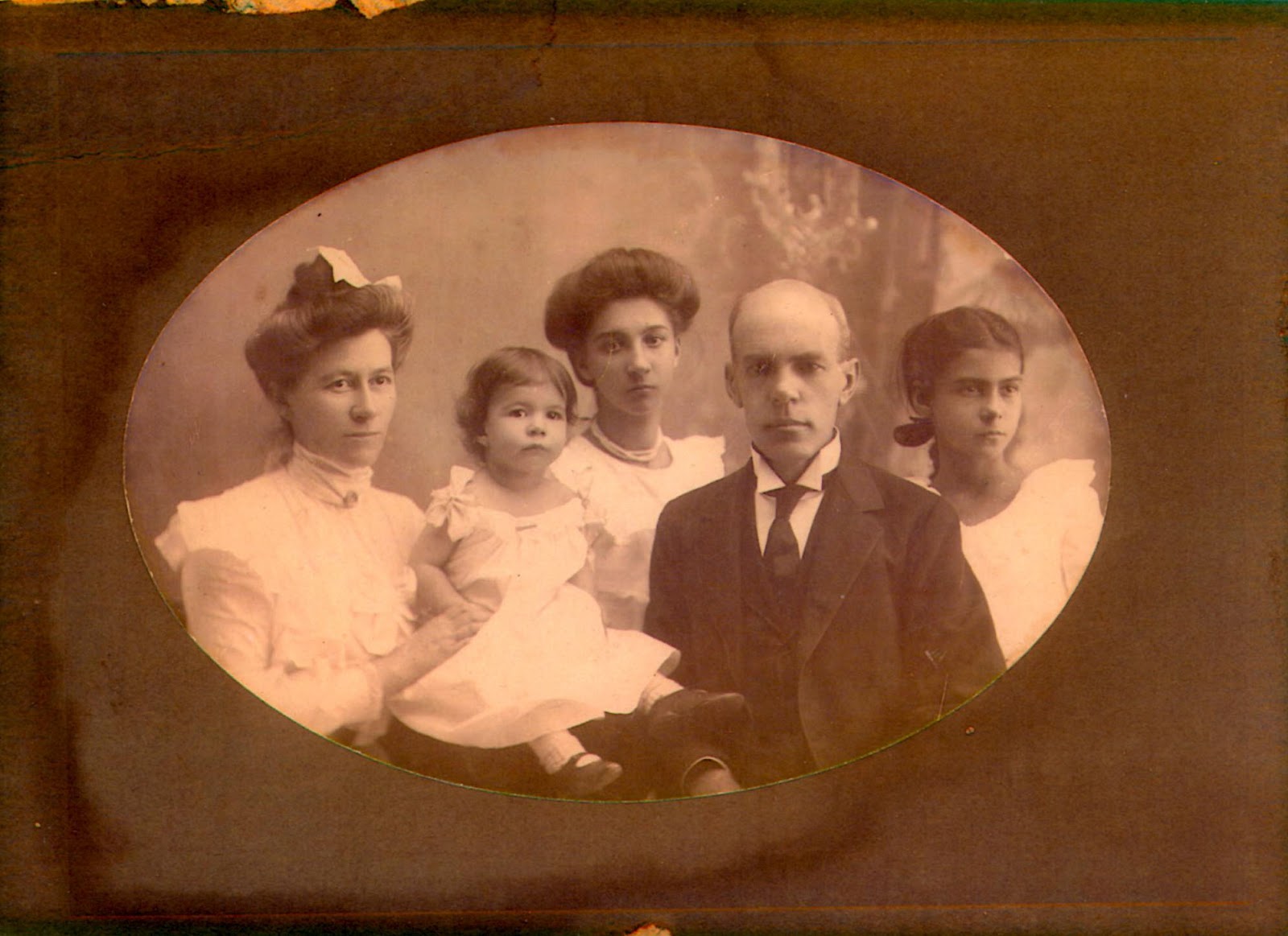
This is a photo of Carl's family. The woman on the left is Big Hattie, the grandmother he lived with. The sad-eyed girl in the middle is "Sister," his aunt, also named Hattie, who raised him after his father left. The very pretty girl on the right is Marguerite, his mother.
Transportation
Carl: A lot of times, to get around, you rode a ferry. You had no bridges; if you went from Norfolk to Portsmouth, or Berkeley, or Newport News, you took a ferry. If you were going west on the Chesapeake and Ohio, which went out of Newport News, you took the ferry boat. They had a fast ferry--steamer, actually, but it was a ferry. Everywhere you went-- if you were going to New York, you took the ferry over to Cape Charles. You traveled by steamboat to these places. You had the Baltimore line-- two lines going to Baltimore-- the Washington line, a Philadelphia line, a New York line, a Boston line, a Charleston and Savannah line-- there were no bridges.
Ellen: When did they start building bridges? Was that one of the things the WPA did in the thirties?
Carl: They actually got into the first bridges during the Roosevelt administration, during the Depression. The Military Highway was built almost entirely by WPA workers. (Note that the Wikipedia link indicates Military Highway was built in 1943 due to the military buildup during World War II. Carl may be conflating two different roads here.) It put a lot of men to work. The Post Office building in downtown Norfolk, that was built by the WPA. I worked there for twenty years, before I went to Portsmouth.
Ellen: Did you ever work for the WPA?
Carl (thinks about it): Somewhere along the line... I went to work for the railroad (first). That was my first really permanent job. I did work some for the WPA, office-type work... Anyway, one of the things that's most different today was the fact that you went nowhere across water except by ferry.
Ellen: Tell me about your first car.
Carl (with sardonic amusement): Oh, my first car was a wonder.... a real dog, I think it was an Essex. I think I paid $35 for it. It had holes in the floor; you could reach down and push yourself along. Holes in the floor where your feet were. That was a real dog.
But the second car I got was fantastic. It was a straight-eight sportscar. Pierce-Arrow, which was the American equivalent of Rolls Royce. That was a real fine car. I got that from-- a young "blade," as we used to call them, and he got married, and his wife insisted he settle down and buy a normal car. So he bought a Buick, or something like that, probably, and sold that car to me for something like $75. Which doesn't sound as cheap as it would be today, because you could buy a new Ford or Chevrolet for $700.
After the war, when I bought my old Chevrolet, I wanted to buy it-- I had a good buy. That was a '48, the last remaining prewar car. It was nothing in the world but a '41, '42-- they discontinued (cars) entirely during the war, made tanks and that sort of thing. When they went back into the business in '47, after the war-- it took them a couple of years to tool up and get going-- they didn't have a new car. They still made the prewar car until about '49, and the first postwar Chevrolets that came out were 1949s. I had a '48, brand new. Well, practically. Guy I worked with bought it, then shortly afterward the '49s came out, and he had to have a new car. So he sold me that thing for a reasonable-- something like $200. Almost brand new. I had that car for a long time, right up till after we were married. (This site suggests Carl's dates are accurate, saying, "In 1949, Chevrolet presented its first all new models since the end of World War II.")
Ellen: When did they start building bridges? Was that one of the things the WPA did in the thirties?
Carl: They actually got into the first bridges during the Roosevelt administration, during the Depression. The Military Highway was built almost entirely by WPA workers. (Note that the Wikipedia link indicates Military Highway was built in 1943 due to the military buildup during World War II. Carl may be conflating two different roads here.) It put a lot of men to work. The Post Office building in downtown Norfolk, that was built by the WPA. I worked there for twenty years, before I went to Portsmouth.
Ellen: Did you ever work for the WPA?
Carl (thinks about it): Somewhere along the line... I went to work for the railroad (first). That was my first really permanent job. I did work some for the WPA, office-type work... Anyway, one of the things that's most different today was the fact that you went nowhere across water except by ferry.
Ellen: Tell me about your first car.
Carl (with sardonic amusement): Oh, my first car was a wonder.... a real dog, I think it was an Essex. I think I paid $35 for it. It had holes in the floor; you could reach down and push yourself along. Holes in the floor where your feet were. That was a real dog.
But the second car I got was fantastic. It was a straight-eight sportscar. Pierce-Arrow, which was the American equivalent of Rolls Royce. That was a real fine car. I got that from-- a young "blade," as we used to call them, and he got married, and his wife insisted he settle down and buy a normal car. So he bought a Buick, or something like that, probably, and sold that car to me for something like $75. Which doesn't sound as cheap as it would be today, because you could buy a new Ford or Chevrolet for $700.
After the war, when I bought my old Chevrolet, I wanted to buy it-- I had a good buy. That was a '48, the last remaining prewar car. It was nothing in the world but a '41, '42-- they discontinued (cars) entirely during the war, made tanks and that sort of thing. When they went back into the business in '47, after the war-- it took them a couple of years to tool up and get going-- they didn't have a new car. They still made the prewar car until about '49, and the first postwar Chevrolets that came out were 1949s. I had a '48, brand new. Well, practically. Guy I worked with bought it, then shortly afterward the '49s came out, and he had to have a new car. So he sold me that thing for a reasonable-- something like $200. Almost brand new. I had that car for a long time, right up till after we were married. (This site suggests Carl's dates are accurate, saying, "In 1949, Chevrolet presented its first all new models since the end of World War II.")
Ellen: What happened to the Pierce-Arrow? Did you sell it when you went to the war?
Carl: I went into the service, and I left that car with somebody I knew, told them to take care of it. They thought I was gone, of course; I mean, when you went in the service-- and he had it a while, and when he got a chance, he sold it up the river. He sold it to somebody who knew the value of it, and he completely restored it, and it was a showcar after the war, at sportscar shows. I mean, it was a showpiece! It had a trunk, and under the second seat was a hole, like that (holds hands a couple of feet apart)-- that was for your golf clubs. It had wire wheels, something like twenty-two inches. Straight-eight. The two spare wheels were in wells on either side-- you've seen pictures, it was the standard sports car of the day. Got about six miles to the gallon (laughs). Beautiful car.
Subscribe to:
Posts (Atom)